
Kashmir Amarnath Yatra 2026 — Routes, Registration, Safety and Everything You Need to Know
The Amarnath Yatra is one of the most spiritually significant pilgrimages in the Hindu tradition — and one of the most physically demanding in the Himalayas. This guide covers every dimension, from registration to the final step to the cave shrine.
1. The Significance of the Amarnath Yatra
Why the Amarnath Yatra 2026 Draws Hundreds of Thousands of Pilgrims
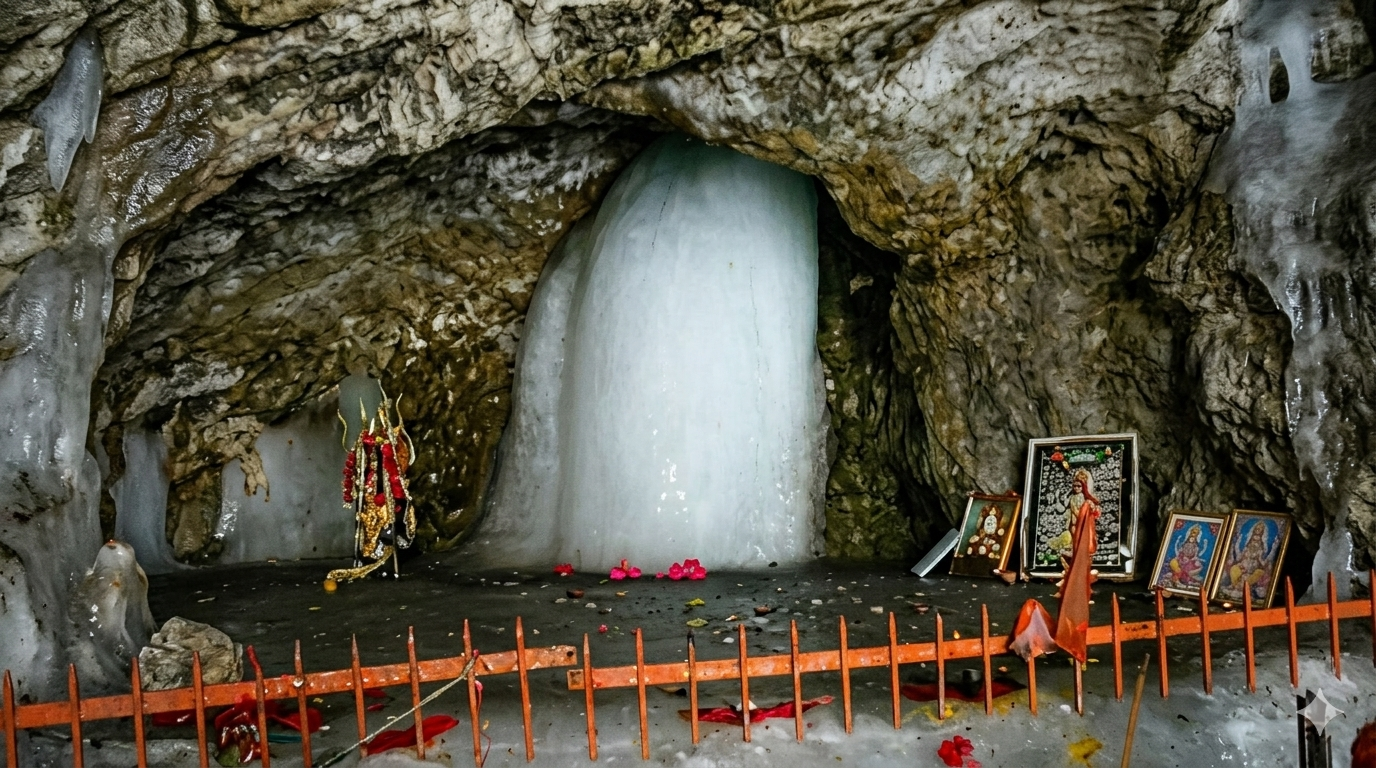
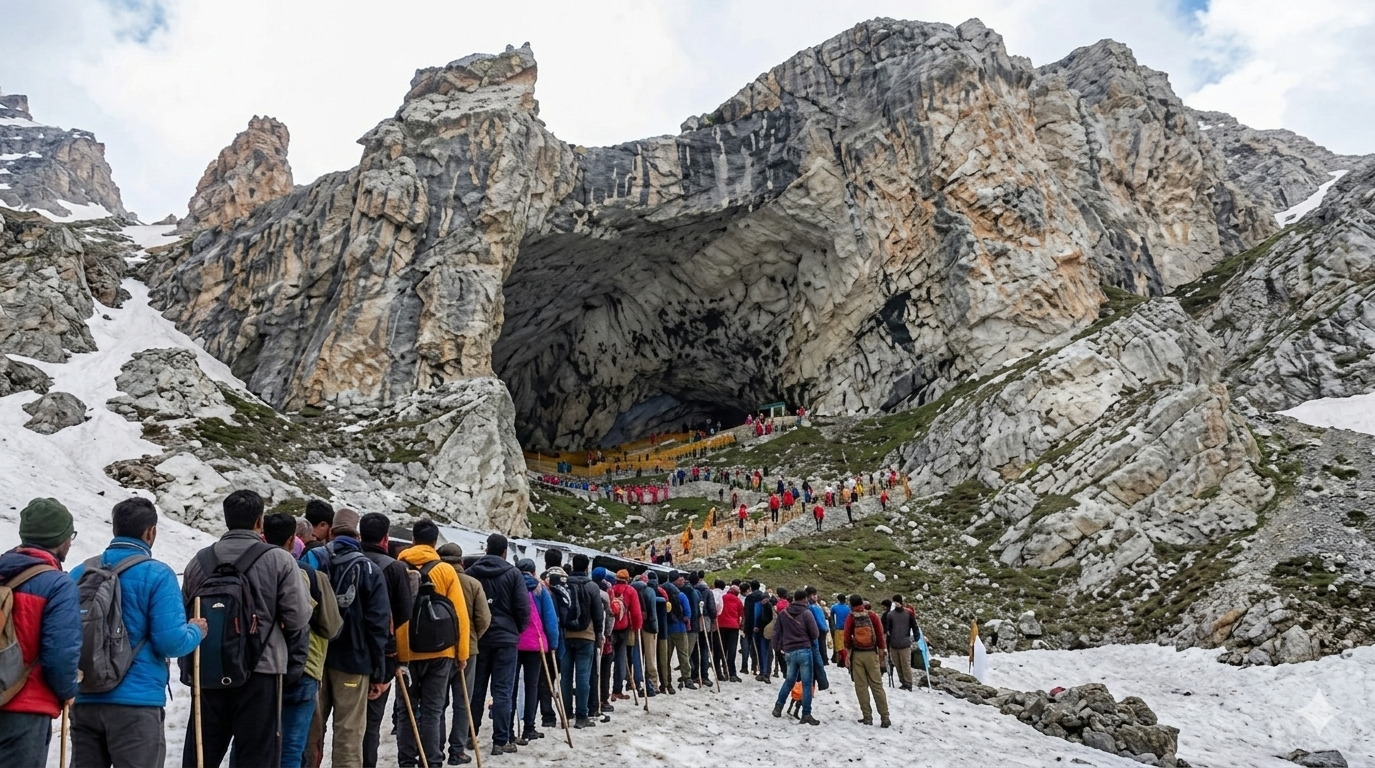
The Amarnath Yatra 2026 will draw pilgrims from across India and the world to one of the most sacred sites in the Hindu tradition. Specifically, the Amarnath Cave at 3,888 metres shelters a naturally formed Shivalinga — a column of ice created by snowmelt dripping through the cave’s roof onto a raised stone base. The Shivalinga waxes and wanes with the lunar cycle, reaching its full height during Shravan Purnima and receding toward the new moon. Consequently, pilgrims time their darshan to witness the Shivalinga at its fullest — a natural phenomenon that reinforces the shrine’s spiritual power with a visible, undeniable rhythm.
Ancient Tradition, Living Practice
Furthermore, the Amarnath pilgrimage is among the oldest continuing traditions in Indian religious life. Specifically, references to the cave appear in the Puranas, and the pilgrimage route has been walked by devotees of Shiva for centuries. According to the Mahatmya — the traditional account of the shrine’s discovery — it was a shepherd named Buta Malik who first discovered the cave after receiving a gift from a saint. The Malik family has since maintained a hereditary role in the shrine’s religious administration, alongside the Shri Amarnathji Shrine Board (SASB) which now governs the modern pilgrimage infrastructure. Moreover, the Yatra is not simply a spiritual exercise — it is a communal act of devotion in which the physical difficulty of the trek is understood as part of the offering.
The Sacred Geography of the Yatra
Above all, understanding the geography of the Yatra enriches the experience significantly. The cave sits in the upper Lidder Valley — the same valley whose lower reaches contain Pahalgam and its famous meadows. Specifically, the Amarnath Cave and the tourist destinations of Pahalgam are part of the same sacred-and-scenic landscape, separated only by altitude and the additional days of walking required to reach the upper sanctum. Therefore, pilgrims who combine their Yatra with a stay in Pahalgam before and after the trek experience both dimensions of this extraordinary valley — the accessible and the profound.
2. Amarnath Yatra 2026 — Expected Dates and Season
When the Yatra Opens and Why the Timing Is Sacred
The Amarnath Yatra 2026 is expected to begin in late 3rd july 2026, on the auspicious day of Ashadha Purnima — the full moon of the Hindu month of Ashadha. Specifically, the Shrine Board determines the exact opening date each year in consultation with the Mahant of the shrine and the J&K administration, typically announcing it three to four months before the commencement. Furthermore, the Yatra is expected to conclude on Raksha Bandhan (Shravan Purnima), which falls in August 2026 — making the total window approximately 30 to 45 days. Consequently, the Yatra window is limited and every day within it carries high pilgrim traffic.
Why Exact Dates Are Not Yet Confirmed for 2026
The SASB announces official 2026 dates and registration opening in early 2026. Specifically, this guide uses historical patterns to give you a reliable planning framework — but we strongly recommend checking the official SASB website for the confirmed 2026 calendar before making any travel bookings. Furthermore, registration slots fill within days of opening. Consequently, monitoring the announcement date is more important than the Yatra dates themselves — because missing the registration window means missing the pilgrimage entirely, regardless of how prepared you are.
3. How to Register for Amarnath Yatra 2026
Registration Is Mandatory — and It Fills Faster Every Year
Registration for the Amarnath Yatra 2026 is non-negotiable. Specifically, every pilgrim must hold a valid registration certificate issued by the SASB — without it, entry to the trekking route is denied at checkpoints. Furthermore, registration assigns you a specific date and route, which determines the volume of pilgrims on each segment of the trail on each day. Consequently, the registration system protects both the pilgrims — through crowd management — and the shrine and its environment — through controlled access.
The Step-by-Step Registration Process
4. The Pahalgam Route — Traditional and Gradual
The Route That Has Carried Pilgrims for Centuries
The Pahalgam route is the traditional and historically significant path to the Amarnath Cave. Specifically, it begins at Nunwan base camp near Pahalgam at approximately 2,740 metres and covers 46 km one way to the cave at 3,888 metres, typically completed over three to five days. Furthermore, the gradual ascent profile makes this route significantly more forgiving for first-time pilgrims, older people, and those who want sufficient time to acclimatise before reaching the cave. Consequently, the Pahalgam route remains the most recommended path for anyone making their first Amarnath Yatra.
The Pahalgam route follows the Lidder River valley upstream before climbing through a series of high-altitude camps. Specifically, the route passes through Chandanwari (first night camp), then over the Pissu Top pass to Sheshnag Lake (second night camp), then over Mahagunas Pass at 4,890 metres to Panchtarni (third night camp), and finally to the Amarnath Cave for darshan on Day 4. Furthermore, the camp infrastructure along this route is the most developed of both routes — tents, langars (community kitchens), medical posts, and toilet facilities are available at every designated camp.
Moreover, the Pahalgam route gives pilgrims something the Baltal route cannot — time to absorb the sacred geography. Specifically, Sheshnag Lake at 3,590 metres, with its seven mountain peaks reflected in its surface, is a landscape of extraordinary beauty that produces a preparatory reverence before the final approach to the cave. In addition, the multi-day structure allows the body to acclimatise progressively, which significantly reduces altitude sickness risk compared to the single-day Baltal approach.
- 0 kmNunwan Base Camp, Pahalgam — 2,740m. Registration checks, medical screening, pony hire. Depart by 6:00 am on Day 1.
- 14 kmChandanwari — 2,900m. First night camp. Tents, langars, and medical post available. Pissu Top climb begins here on Day 2.
- 28 kmSheshnag — 3,590m. Second night camp. The lake is visible from the campsite and is sacred in its own right. Mahagunas Pass lies ahead.
- 36 kmPanchtarni — 3,800m. Third night camp. The cave is 8 km ahead. Early morning departure on Day 4 is strongly recommended for shortest queues at darshan.
- 46 kmAmarnath Cave — 3,888m. Darshan of the Shivalinga. Return to Panchtarni or proceed to Baltal for descent by the shorter route.
5. The Baltal Route — Short and Steep
The Route for Pilgrims Who Want a Single-Day Return
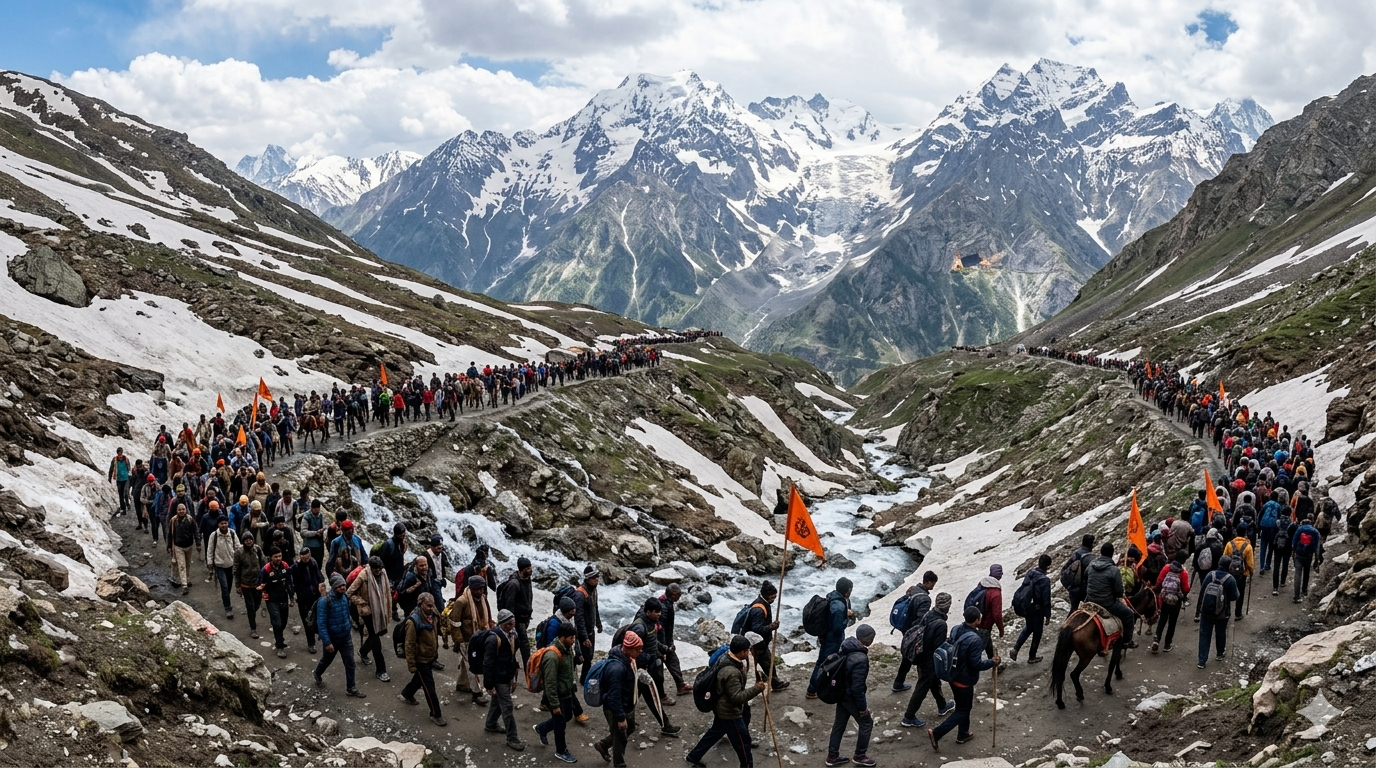
The Baltal route is the shorter and more recently established path to the Amarnath Cave — 14 km one way from the Baltal base camp, compared to 46 km via Pahalgam. Specifically, the Baltal base camp sits at approximately 2,743 metres on the Srinagar–Leh Highway, making it reachable directly from Srinagar in approximately 4.5 hours by road. Furthermore, the short distance means most pilgrims complete the Baltal route as a single-day return trek — ascending in the morning and returning to base camp the same evening. Consequently, it is the route most suited to pilgrims with limited time, younger and physically fit devotees, and those making a repeat Yatra who have already completed the Pahalgam route on a previous occasion.
The Baltal route climbs 1,145 metres in 14 km — an average gradient that is significantly steeper than the Pahalgam route’s more spread ascent over 46 km. Specifically, sections of the Baltal trail rise at angles that require the hands as well as the feet in the steeper gorge sections, particularly near the Domel and Barari camps. Furthermore, the single-day return structure means the body has no opportunity to acclimatise overnight at an intermediate altitude before reaching the cave. Consequently, altitude sickness is proportionally more common on the Baltal route than on the multi-day Pahalgam route.
Moreover, the Baltal route is not served by pony or palanquin (doli) for the full distance in the steeper upper sections — porters are available but the path is genuinely narrow and rocky above 3,000 metres. In addition, the return journey from the cave in the afternoon must be completed before 5:00 pm when the route is officially required to close for the day — which means both the ascent and descent must be completed within a single daylight window. Therefore, Baltal pilgrims must depart base camp no later than 5:00 am to complete the round trip comfortably.
- 0 kmBaltal Base Camp — 2,743m. Depart by 5:00 am. Registration and RFID scan at the base camp checkpoint.
- 4 kmDomel — 3,000m. First significant rest point. Medical tent and langar available. The trail steepens noticeably above Domel.
- 7 kmBarari — 3,350m. Mid-route camp. Rest, hydrate, and assess your energy before the final section. The cave is 7 km ahead.
- 11 kmSangam — 3,700m. The Pahalgam and Baltal routes merge here. From this point, both sets of pilgrims walk the final section together toward the cave.
- 14 kmAmarnath Cave — 3,888m. Darshan. Begin return by 1:00 pm at the latest for a comfortable descent to Baltal before dark.
6. Pahalgam vs Baltal — Which Route Is Right for You?
The Decision Every Pilgrim Needs to Make Before Registering
The route choice for Amarnath Yatra 2026 is the most consequential planning decision you make — because registration assigns you to a specific route, and changing after registration is administratively complex. Specifically, the right choice depends on your physical fitness, the number of days available, your prior Himalayan trekking experience, and whether you are travelling with older people, young children, or individuals with any health condition. Therefore, use the guidance below to make an informed decision rather than defaulting to the shorter route simply because it is shorter.
- You are making your first Amarnath Yatra
- You have 5 to 7 days available for the full circuit
- Your group includes older people or those with limited mountain experience
- You want time to acclimatise at intermediate altitudes
- The sacred geography — Sheshnag Lake, Mahagunas Pass — matters to you
- You prefer a gradual ascent with full camp infrastructure each night
- You want pony support available for the full route distance
- You are physically fit and have previous Himalayan trekking experience
- You can only spare 2 to 3 days for the Yatra total
- You have made the Pahalgam Yatra previously and want the shorter alternative
- You are travelling solo or in a small group of fit adults
- You prefer the directness of a single-day return darshan
- You are arriving from the Srinagar direction on the Leh Highway
7. Altitude Awareness on the Amarnath Trek
The Most Important Safety Preparation for This Pilgrimage
The Amarnath Cave sits at 3,888 metres — a height that imposes real physiological demands on any unacclimatised body, regardless of age, fitness, or prior Himalayan exposure. Specifically, the Mahagunas Pass on the Pahalgam route reaches 4,890 metres, which is high enough to produce Acute Mountain Sickness (AMS) in a significant proportion of pilgrims who ascend too quickly. Furthermore, the combination of physical exertion, cold temperature, and reduced oxygen creates cumulative physiological stress that is significantly greater than the sum of any single factor. Consequently, altitude preparation is the dimension of Amarnath Yatra planning that pilgrims most commonly underestimate.
AMS Recognition and Response on the Yatra Route
Specifically, AMS presents as persistent headache, nausea, loss of appetite, fatigue, and light-headedness. These symptoms typically appear 6 to 12 hours after arriving at a new altitude rather than immediately. Furthermore, the most dangerous pilgrimage behaviour is continuing to ascend while symptomatic — the human desire to complete the darshan after days of preparation creates a powerful psychological pressure to push through warning signs that the body is explicitly communicating. Consequently, the SASB positions medical posts at every camp on both routes specifically to catch pilgrims who are ascending while unwell.
8. Helicopter Service for Amarnath Yatra 2026
The Helicopter Option — Who It Serves and How It Works
Helicopter service for the Amarnath Yatra is a genuinely important accessibility option — not a shortcut or a less-devoted choice. Specifically, it enables older pilgrims, those with physical limitations, and pilgrims with cardiac or respiratory conditions to complete the darshan that the full trek would place at unacceptable health risk. Furthermore, the helicopter does not deliver pilgrims to the cave — it delivers them to Panjtarni, at 3,800 metres and approximately 6 km from the cave. From Panjtarni, pilgrims walk, ride a pony, or use a doli (palanquin) to the cave shrine itself. Consequently, even the helicopter Yatra involves meaningful physical engagement with the final approach.
How to Book Helicopter Service for Amarnath 2026
Helicopter bookings for Amarnath Yatra 2026 are made through SASB-authorised helicopter operators — not through the SASB directly. Specifically, the authorised operators publish booking portals when registration opens, and seats fill within hours of opening due to extreme demand. Furthermore, helicopters operate from two points: the Pahalgam helipad (near Nunwan base camp) on the Pahalgam route, and the Baltal helipad on the Baltal route — both landing at Panjtarni. In addition, helicopter service is subject to weather — cloud and wind conditions can suspend operations for entire days without notice. Therefore, all helicopter pilgrims must carry a contingency plan for their Yatra in case of weather suspension on their scheduled day.
9. What to Pack — The Complete Yatra Checklist
Packing for the Amarnath Yatra Is Different From Any Other Trek
The Amarnath Yatra presents a specific packing challenge: you must prepare for extreme cold and rain at altitude while keeping your load manageable enough for a multi-day trek at 3,500 to 4,900 metres. Specifically, every kilogram of pack weight above 5 kg adds disproportionate cardiovascular demand at altitude. Furthermore, the porters and ponies available on both routes can carry the bulk of your camp gear — which means your personal day pack needs only the essentials for each day’s walking section. Consequently, the goal is a day pack under 5 kg and a porter load for everything else.
- Moisture-wicking thermal base layer (top and bottom)
- Mid-layer fleece or light down jacket
- Waterproof insulated outer jacket
- Waterproof trekking trousers
- Warm gloves and a woollen hat
- Neck gaiter or balaclava for high passes
- Trekking boots — ankle support, non-slip sole — broken in before the trek
- Wool trekking socks — 3 to 4 pairs minimum
- Sandals or slip-ons for camp use — never walk barefoot at altitude
- Waterproof gaiters for snowfield sections (Pahalgam route — June)
- Paracetamol and ibuprofen for headache and fever
- ORS sachets for dehydration management
- Diamox (acetazolamide) — if prescribed by your doctor for AMS
- Blister kit — moleskin and antiseptic cream
- Pulse oximeter for blood oxygen monitoring
- All personal prescription medication plus 3-day emergency supply
- Trekking poles — non-negotiable on steep and icy sections
- Headlamp with spare batteries — critical for 5:00 am departures
- Water bottles — minimum 2 litres capacity total
- Water purification tablets or filter straw
- High-energy snacks — nuts, dry fruit, energy bars
- Lightweight emergency rain poncho
- Yatra permit — printed copy and digital backup
- RFID card — keep on your person at all times
- Original government-issued photo ID (Aadhaar or Passport)
- Original CHC medical certificate
- Emergency contact card — laminated and in your day pack
- Travel insurance documents with emergency evacuation cover
- SPF 50+ sunscreen — reapply every 90 minutes above 3,000m
- UV400 glacier glasses — snow reflection UV is severe
- Lip balm with SPF — lips crack and burn rapidly at altitude
- Hand cream — cold and low humidity dehydrate skin aggressively
10. Safety, Health and Emergency Guidance
The SASB Safety Infrastructure — What It Provides and What It Does Not
The SASB operates an extensive safety infrastructure across both Yatra routes — medical posts at every camp, RFID tracking of every registered pilgrim, helicopter evacuation capability, and the largest organised voluntary langar system in the Himalayas. Specifically, free meals are provided at every camp by the thousands of volunteers from across India who contribute their service to the Yatra. Furthermore, CRPF personnel maintain the route and checkpoints throughout the Yatra window. Consequently, you are never alone on the Amarnath Yatra — but you are responsible for your own physical preparation before you arrive at the base camp.
The Three Most Common Medical Situations on the Yatra
Three medical situations account for the majority of incidents on the Amarnath Yatra. First, Acute Mountain Sickness — almost always the result of ascending too quickly or ignoring early symptoms at the previous camp. Second, hypothermia — most commonly affecting pilgrims who are inadequately dressed for the temperature at the high passes, particularly during rain. Third, dehydration — which accelerates at altitude because the thirst mechanism weakens at high elevations and pilgrims often do not drink enough until symptoms are already significant. Specifically, preventing all three requires the same core habits: ascend slowly, layer adequately, and drink 3 to 4 litres of water per day regardless of thirst level.
- Acclimatise for 1 to 2 nights in Pahalgam or Baltal before the trek begins
- Start every trek day before 6:00 am — afternoon weather deteriorates rapidly
- Report any headache, nausea, or breathlessness to the camp medical post immediately
- Drink 3 to 4 litres of water per day — set a timer if needed
- Walk at the pace of the slowest member of your group
- Turn back immediately if any member of the group shows AMS signs
- Register your RFID at every checkpoint without exception
- Attempting to continue ascent while symptomatic for AMS
- Walking the high-altitude sections in darkness without a headlamp
- Consuming alcohol at any point during the Yatra
- Trekking without trekking poles on the steep Baltal sections
- Underestimating the cold at the high passes — wind makes it far colder than the thermometer suggests
- Skipping the RFID checkpoint scan — you become invisible to the SASB rescue system
11. Practical Tips From Local Kashmir Experts
What Six Years of Coordinating Yatra Packages Has Taught Us
Emaar Tour and Travels has been coordinating Amarnath Yatra packages from Srinagar for over six years. Specifically, the following tips are drawn directly from the most consistent feedback and the most preventable difficulties that our guests have experienced across multiple Yatra seasons. Furthermore, none of these tips requires significant extra cost or preparation — they simply require knowing them before you arrive.
12. Frequently Asked Questions — Amarnath Yatra 2026
What Pilgrims Ask Most When Planning the Yatra
Conclusion — The Yatra Begins Long Before the First Step
Preparation Is the First Act of Devotion
The Amarnath Yatra 2026 will be, for hundreds of thousands of pilgrims, the most significant journey of their lives. Specifically, the combination of high altitude, mountain terrain, variable weather, and the emotional weight of the darshan creates a physical and spiritual intensity that few other experiences in Indian religious life can match. Furthermore, the preparation you invest before the first step — the medical certificate, the registration, the acclimatisation, the packing — is not separate from the devotion. It is part of it. Consequently, a pilgrim who arrives at Nunwan base camp physically prepared, document-complete, and appropriately dressed has already demonstrated the seriousness of intention that the Yatra deserves.
Therefore, begin your preparation early. Register as soon as the SASB portal opens. Speak to your doctor about the CHC well in advance. Book your helicopter or pony on the day registration confirms your date. Above all, give yourself enough time at Pahalgam or Baltal to acclimatise before the first step of the trek — because those one or two days of patience before the mountain will determine the quality of everything that follows. We at Emaar Tour and Travels are here to coordinate every practical dimension of this journey — so that when you finally stand before the Shivalinga, nothing on your mind belongs to logistics.
About the Author: This guide was written by the travel specialists at Emaar Tour and Travels, a Srinagar-based tour operator with over six years of experience coordinating Amarnath Yatra packages — including CHC documentation support, base camp accommodation, pony booking, helicopter coordination, and on-ground Pahalgam acclimatisation itineraries. Visit us at emaartourandtravels.in to begin planning your 2026 Amarnath Yatra.