
Kailash Kund and ABC Valley Pahalgam — The Complete Trek and Excursion Guide
Two of Kashmir’s most rewarding mountain experiences begin from the same valley. This guide gives you everything — the route, the elevation, the culture, the season, and the preparation — to make the most of both.
1. Pahalgam as a Trekking Base — Understanding the Valley
Why Kailash Kund and ABC Valley Pahalgam Begin in the Same Place
Kailash Kund and ABC Valley Pahalgam are two distinct experiences that share a single geographic starting point — the Lidder Valley, which fans out from Pahalgam town in two directions. Specifically, the Lidder River splits near the town: one branch runs northwest toward Aru Village and, beyond it, the Kailash Kund lake; the other runs northeast toward Chandanwari and the Amarnath Yatra base. Consequently, understanding the valley’s structure before you arrive makes route-planning significantly clearer and prevents the common mistake of trying to combine both experiences in a single exhausting day.
The Lidder Valley — Geography That Creates Opportunity
Furthermore, Pahalgam sits at 2,740 metres above sea level — high enough to feel genuinely alpine, low enough to avoid serious altitude effects for most healthy visitors. The town itself lies at the confluence of the two Lidder branches, which means every day trip and trek originates within a few minutes’ drive of the hotel district. Specifically, this compact arrangement is what makes Pahalgam such an efficient trekking base. Moreover, the valley’s pine and fir forests create a natural acclimatisation environment — even a short walk on the first evening lowers the physiological impact of the altitude before the bigger days begin.
Two Experiences, Two Very Different Demands
Above all, the most important planning decision in Pahalgam is recognising that Kailash Kund and the ABC Valley circuit make completely different physical demands. Kailash Kund is a serious mountain trek — 14 km round trip with 900 metres of elevation gain — that rewards fit adults with genuine high-altitude experience. The ABC Valley circuit, by contrast, is a gentle to moderate full-day excursion accessible to families with young children, older people, and visitors with no trekking background. Therefore, both can exist within the same Pahalgam stay — on separate days, at separate paces, for separate members of the group.
2. Kailash Kund — The Sacred Alpine Lake
What Makes Kailash Kund Extraordinary
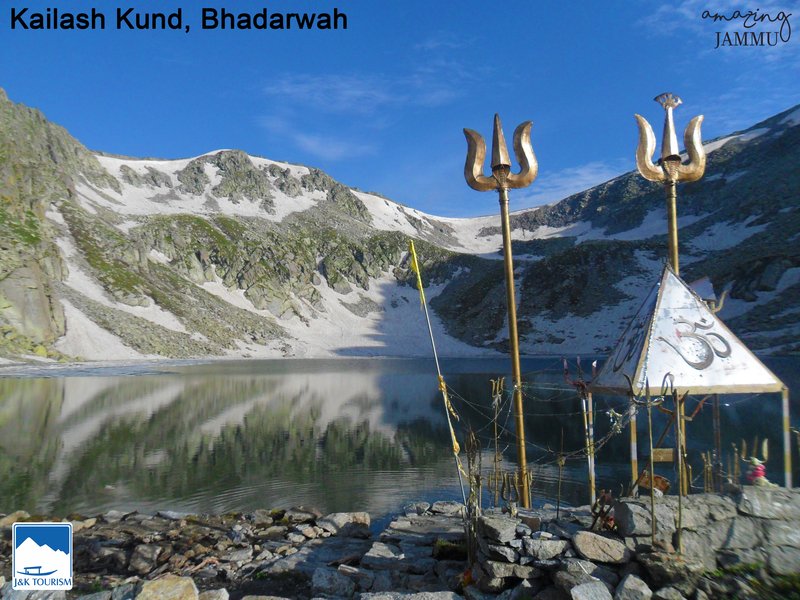
Kailash Kund is a glacially formed alpine lake at approximately 3,340 metres, set in a natural rock bowl above the upper Aru Valley. Specifically, the lake is ringed on three sides by unnamed peaks between 4,000 and 4,500 metres, whose snowfields feed the lake with meltwater throughout the summer. The water is ice-cold, startlingly clear, and — on a windless morning — reflects the surrounding peaks with a mirror precision that is among the finest natural photography subjects in the entire Kashmir region.
The Cultural and Spiritual Significance of the Lake
Furthermore, Kailash Kund carries deep sacred significance for Kashmiri Hindus. The name “Kund” derives from the Sanskrit for a sacred pool or tank — and the lake is considered a manifestation of Lord Shiva’s presence in the Trikuta-adjacent sacred landscape of the Kashmir Himalayas. Specifically, Kashmiri Pandit pilgrims have trekked to Kailash Kund for centuries as part of a wider devotional geography that includes the Amarnath Cave shrine. Consequently, the lake is not simply a scenic destination — it is a place where the physical challenge of the ascent is understood as an act of devotion, not merely recreation.
The Lake in Different Seasons
The visual character of Kailash Kund changes dramatically across the season. In June, the surrounding snowfields reach down close to the water’s edge — the lake is ringed by white, and the approach from the upper meadow crosses permanent snow. In July and August, the snow retreats and the meadows between the treeline and the lake erupt in alpine wildflowers — specifically edelweiss, gentian, and Himalayan blue poppy in the right years. By September, the snow has largely disappeared from the immediate lake area, the water is at its deepest blue, and the surrounding rock walls are unobstructed. Therefore, each month gives you a different Kailash Kund — not a better or worse version, but a genuinely distinct one.
3. Kailash Kund Trek Route — Stage by Stage
The Four Terrain Zones Between Aru and the Lake
The Kailash Kund trek passes through four distinctly different terrain zones. Specifically, understanding these zones before departure helps you pace correctly — the most common mistake on this trek is expending too much energy in the comfortable lower forest and arriving at the steep upper section already fatigued. Therefore, the stage-by-stage breakdown below is designed to give you a realistic picture of the gradient, the terrain, and the visual character at each point.
4. Kailash Kund Preparation and Safety
Who Should Attempt the Kailash Kund Trek
Kailash Kund is suitable for fit adults with some prior hill-walking experience. Specifically, you do not need technical mountaineering skill — but you do need the cardiovascular fitness to sustain an uphill walk for five to six hours at altitude. Furthermore, anyone with a cardiac condition, high blood pressure, or severe respiratory condition should consult a doctor before attempting the trek. The 900-metre elevation gain places real demand on the cardiovascular system, and the remote location means medical assistance is not rapidly available.
What to Pack — Kailash Kund Specific
The following items are non-negotiable for the Kailash Kund trek specifically. These go beyond a standard day-trip kit because the elevation, duration, and remoteness of the route create demands that shorter excursions do not.
- Trekking poles — essential on the steep rocky section and the snowfield crossing in June and early July.
- Trekking boots with ankle support and a non-slip rubber sole — not trainers or casual shoes.
- At least 2.5 litres of water — no reliable water source exists above Aru Village on the trail.
- A full packed lunch and energy snacks — no food is available on the route above Aru.
- A waterproof outer layer — afternoon rain is possible in July and August without warning.
- A warm mid-layer — the lake at 3,340 metres is significantly colder than the Pahalgam valley floor.
- Sun cream SPF 50 and UV sunglasses — alpine UV intensity above the treeline is severe.
- A basic first-aid kit including blister treatment, pain relief, and any personal medication.
- A fully charged phone with the offline map downloaded for the Aru Valley area.
5. ABC Valley — Aru, Baisaran and Chandanwari
The Logic Behind the ABC Name
The ABC Valley circuit in Pahalgam takes its name from the initials of its three stops — Aru (A), Baisaran (B), and Chandanwari (C). Specifically, local guides and tour operators coined this naming convention to give the full-day circuit a memorable identity that conveys its structure to first-time visitors. Furthermore, the three letters also represent a natural progression from the easiest to the most scenically dramatic — Aru is gentle and intimate, Baisaran is open and panoramic, and Chandanwari is raw and alpine.
Moreover, the ABC circuit is specifically designed for visitors who want the full Pahalgam landscape experience without committing to the physical demands of the Kailash Kund trek. Consequently, it is the most popular full-day excursion from Pahalgam — and the one we recommend most consistently for families, older people, and first-time Kashmir visitors. In addition, each stop is reachable by road or pony, which means the circuit adapts easily to any mobility level or age group within your travelling party.
6. A — Aru Village and the Lidder Meadow
The Quietest and Most Authentic of the Three Stops
Aru Village sits at the head of the northwestern Lidder branch, 12 km from Pahalgam by a winding mountain road. Specifically, it is a traditional Gujjar and Bakarwal settlement — a community whose livelihood centres on seasonal grazing of horses and sheep across the alpine meadows above the village. The village itself is small, unhurried, and largely unaffected by the commercial development that has transformed Pahalgam’s main market area. Consequently, arriving in Aru feels like stepping back into a version of Kashmir that the tourist infrastructure has not yet fully reached.
The Aru meadow above the village is a wide, flat grassy expanse beside the Lidder stream — an ideal space for a relaxed morning before the more energetic stops of the ABC circuit. Specifically, the morning light in Aru between 8:00 and 10:00 am, when the upper peaks are lit and the valley floor is still cool and damp, is some of the finest natural light in the Pahalgam area. Furthermore, horses graze freely across the meadow in summer — their presence against the backdrop of the surrounding forested ridgeline creates a natural composition that photographers specifically seek out.
Moreover, Aru serves as the starting point for three serious treks — Kailash Kund, the Tarsar Marsar Lake route, and the Kolhoi Glacier approach. Consequently, the village trailhead has a small infrastructure of guides, pony wallahs, and dhaba stalls that make it a practical and well-serviced base. In addition, spending time at the dhaba on arrival — Kashmiri chai, local bread, and the company of Gujjar families preparing for the day — gives the ABC circuit an authentic cultural dimension that pure scenic excursions lack.
7. B — Baisaran, the Mini Switzerland of Kashmir
The Panoramic Heart of the ABC Circuit
Baisaran sits on an open hilltop meadow above Pahalgam town at approximately 2,840 metres — just 5 km from the main market, but elevated enough to give a panoramic view across the entire Lidder Valley that the town-level perspective completely hides. Specifically, the meadow is encircled by pine forest on its upper edges and drops away into the valley below on its south side — creating a natural amphitheatre of green that faces directly toward the snow peaks of the Pahalgam range. Furthermore, it is this combination of open grassland, pine forest edge, and Himalayan panorama that earned Baisaran the well-worn but entirely accurate nickname “Mini Switzerland of Kashmir.”
Baisaran is reached either by a 30-minute pony ride from the Pahalgam market pony stand, or by a 45-minute walk through the pine forest on the trail that begins near the tourist complex. Specifically, the pony route is the more popular option and is entirely appropriate for older people, young children, and anyone who prefers to conserve energy for the rest of the ABC day. Furthermore, the pony track itself passes through a beautiful pine corridor that gives shade, scent, and the occasional glimpse of Himalayan Monal pheasant in the understorey.
Moreover, Baisaran’s meadow is large enough that it absorbs its visitors without ever feeling crowded, even during peak summer. Specifically, the northern edge near the forest line is the least trafficked area and gives the finest wide-angle photography of the entire meadow with the forest behind and the peaks above. In addition, the meadow’s central open area is ideal for children — flat, safe, and large enough for free running and play. Consequently, Baisaran is the stop that most families identify as the highlight of the entire ABC circuit.
8. C — Chandanwari, Snowfields and the Amarnath Gateway
Where the ABC Circuit Reaches Its Most Alpine Point
Chandanwari is the farthest and most dramatically situated of the three ABC stops — 25 km northeast of Pahalgam along the Lidder gorge, at approximately 2,900 metres. Specifically, the road journey itself is one of the finest scenic drives in the Kashmir Valley: the gorge narrows as you climb, the river drops away below the road’s edge, and the forested valley walls are replaced by open rock faces. Furthermore, Chandanwari’s significance extends beyond scenery — it is the first stage of the Amarnath Yatra route, and its spiritual atmosphere, pilgrimage infrastructure, and seasonal energy make it unlike any other stop on the ABC circuit.
The snowfield at Chandanwari is accessible directly from the road’s end without any trekking. Specifically, between May and August a permanent snowfield lies just above the vehicle parking area — visitors walk two to three minutes from the road to reach it. Furthermore, sledge rides on the snow are offered by local operators, and the experience of standing on a genuine snowfield with the Lidder gorge visible far below is specifically one that most visitors — particularly those from warmer Indian cities — find unforgettable.
Moreover, the Amarnath Yatra atmosphere at Chandanwari adds a dimension unavailable at Aru or Baisaran. Specifically, during the Yatra season in July and August, the area is filled with pilgrims preparing for the high-altitude trek to the Amarnath Cave. Their faith, their preparation rituals, and the collective devotional energy create an encounter with Kashmiri religious culture that no other stop on the ABC circuit provides. In addition, the small shrine and offering points near the snowfield give even non-pilgrims a quiet moment of reflection at a genuinely sacred location. Consequently, Chandanwari rewards visitors who approach it with curiosity rather than simply treating it as a snow activity destination.
9. Best Season for Kailash Kund and ABC Valley Pahalgam
Each Month Gives a Different Version of Both Experiences
The seasons affect Kailash Kund and the ABC Valley circuit in specific and different ways. Specifically, the Kailash Kund trek is most rewarding in September — dry trail, clear sky, and no snowfield hazard. The ABC circuit works well from May through October, with each month adding a different visual quality. Furthermore, understanding the seasonal nuances allows you to choose your travel window around the specific experience you most want rather than defaulting to peak season.
| Month | Kailash Kund Conditions | ABC Valley Conditions | Crowds | Overall Verdict |
|---|---|---|---|---|
| May | Trail partially snowy above 3,000m — guides essential | Wildflowers beginning — Chandanwari snow at its deepest | Low | Good for ABC, early season for Kailash |
| June | Snow crossing on upper section — most dramatic | Full wildflower season at Baisaran and Aru | Moderate | Best for photographers — snow and flowers |
| July | Green meadows, afternoon cloud risk — early start vital | Lush green — Chandanwari snowfield still accessible | Peak Season | Excellent — build afternoon flexibility |
| August | Driest conditions — good trail — occasional rain | Amarnath Yatra energy at Chandanwari | High | Very good — carry waterproofs |
| September | Best month — dry, clear, no snow, fewest people | Crystal clear skies — autumn gold beginning at Aru | Low | ⭐ Top Recommendation — both experiences |
| October | Cold — possible early snow above 3,200m | Autumn gold in Aru and Baisaran pine forest | Very Low | Excellent for ABC — check Kailash weather |
10. Suggested 2-Day Pahalgam Itinerary
How to Combine Kailash Kund and ABC Valley Intelligently
Two full days in Pahalgam allow you to complete both Kailash Kund and the full ABC Valley circuit without rushing either experience. Specifically, the itinerary below places the ABC circuit on Day 1 — which serves as acclimatisation — and reserves Kailash Kund for Day 2 when your body has adjusted to the altitude and your logistics are confirmed.
- 7:30 AMDrive to Aru Village (12 km, 30 min). Walk the Aru meadow trail for 2 km above the village. Specifically, hire the Kailash Kund guide here for Day 2 — confirming at Aru in person avoids the risk of guide unavailability the following morning.
- 10:00 AMReturn to Pahalgam and ride up to Baisaran by pony from the market pony stand (30 min). Spend 90 minutes on the meadow. Furthermore, the 11:00 am light at Baisaran is specifically the finest of the day for photography from the northern meadow edge.
- 1:00 PMDrive to Chandanwari (25 km, 45 min). Snow activity on the snowfield. Lunch at one of the Chandanwari dhabas. Consequently, the simple Kashmiri dal and roti served here after a morning of activity is one of the finest meals of the trip.
- 4:00 PMReturn to Pahalgam. Rest, early dinner, and an 8:30 pm bedtime — Kailash Kund departs early tomorrow. Above all, avoid alcohol tonight: it specifically increases dehydration and fatigue at altitude the following day.
- 5:30 AMWake and eat a full breakfast at the hotel — specifically including carbohydrates and protein. Trek-day energy management begins with the morning meal, not the first rest stop.
- 6:30 AMDrive to Aru Village (30 min). Meet your guide at the village trailhead. Check all gear — specifically verify water quantity and trekking poles before starting.
- 7:00 AMBegin the Kailash Kund trek. Forest section for first 4.5 km — maintain a comfortable conversational pace. Furthermore, the bird activity in this section is highest before 9:00 am, so keep binoculars accessible in a chest pocket.
- 10:00 AMEmerge above the treeline into alpine meadow. First clear view of the upper basin. Rest for 10 minutes and take your bearings — specifically photograph the route ahead so you can reference it on the return descent.
- 11:30 AMArrive Kailash Kund Lake. Specifically, the reflection quality in the lake is at its peak between 11:30 am and 1:00 pm — therefore time your arrival accordingly rather than rushing the ascent.
- 12:15 PMLunch at the lakeside. Spend 45 minutes at the lake before beginning descent. Moreover, leave all sacred offering sites undisturbed — the votive stones and small shrines at the water’s edge are active pilgrimage markers, not decorative features.
- 1:00 PMBegin descent. Return to Aru Village by approximately 4:00 pm. Drive back to Pahalgam. Consequently, a restorative dinner at a riverside restaurant in Pahalgam town is the ideal end to the finest trekking day the valley offers.
abc-valley-pahalgam-baisaran-meadow.jpg |
Alt text: “ABC Valley Pahalgam — Baisaran meadow with pony riders and panoramic Kashmir mountain view” |
Size: 900×600px
11. Practical Tips and Packing Guide
Preparation That Applies to Both Experiences
Several practical tips apply equally to both Kailash Kund and the ABC Valley circuit. Specifically, altitude, weather unpredictability, and remote trail logistics create a shared set of preparation requirements that every Pahalgam visitor should understand before departure.
12. Frequently Asked Questions
What Visitors Most Want to Know Before Arriving in Pahalgam
Conclusion — Two Experiences, One Valley, Unforgettable Days
Kailash Kund and ABC Valley Pahalgam Reward Every Kind of Traveller
The finest thing about Kailash Kund and ABC Valley Pahalgam together is that they cover the complete spectrum of what the Lidder Valley has to offer — the sacred and the scenic, the demanding and the leisurely, the solitary upper lake and the social energy of the Baisaran meadow. Specifically, no two stops on the ABC circuit feel alike. No stage of the Kailash Kund trek resembles the stage before it. Consequently, two days in Pahalgam built around these two experiences gives you more varied, more memorable content than any other two-day combination in the Kashmir Valley.
Therefore, plan carefully, start early, and trust the mountain. Furthermore, let our team at Emaar Tour and Travels handle the logistics — the vehicle, the guide, the timing, the sequence — so that you arrive at Aru Village on the morning of your Kailash Kund trek with nothing to think about except the trail ahead. Above all, that is the version of Pahalgam worth travelling for.
About the Author: This guide was written by the travel specialists at Emaar Tour and Travels, a Srinagar-based tour operator with over six years of experience guiding visitors through the Pahalgam area — including Kailash Kund treks, ABC Valley circuits, Amarnath Yatra support trips, and family-oriented Betaab and Chandanwari excursions. Visit emaartourandtravels.in to plan your Kashmir journey.