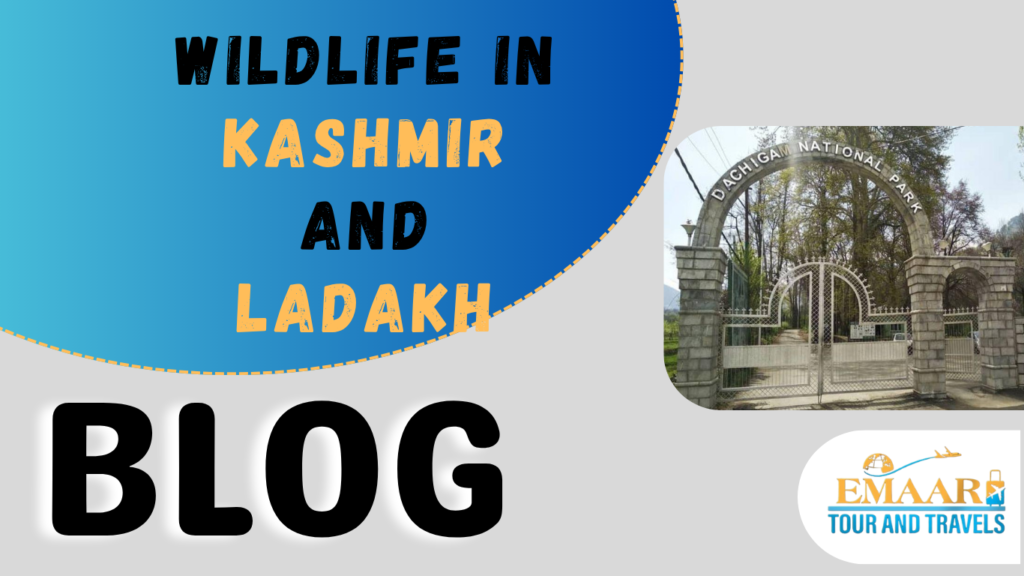
Wildlife in Kashmir — A Complete Guide to the Valley’s Animals, Birds and Sanctuaries
From the critically endangered Kashmir Stag moving through the deodar forests at Dachigam to the Snow Leopard crossing a Ladakhi ridgeline at dawn — a local guide to one of the most biodiverse Himalayan regions in Asia.
1. Why Kashmir Is a Wildlife Destination Unlike Any Other
A Valley at the Crossroads of Three Biological Worlds
Kashmir sits at a meeting point of three major biogeographic zones — the Himalayan, the Indo-Gangetic, and the Central Asian. Consequently, the valley and its surrounding ranges host a biodiversity that is extraordinary even by Himalayan standards. Specifically, animals from three separate evolutionary lineages share this landscape: high-altitude specialists adapted to extreme cold, forest-dwelling species at home in the temperate deodar and fir forests, and wetland species drawn to the valley’s extensive lake and river network. Therefore, a single week in Kashmir can yield wildlife sightings that would require separate expeditions to three different countries anywhere else in Asia.
From Valley Floor to Snow Line — Four Distinct Habitats
Furthermore, the vertical range within Kashmir is enormous. The valley floor at 1,600 metres supports wetland birds, otters, and marsh crocodiles. The temperate forest belt between 2,000 and 3,500 metres shelters the Hangul deer, Himalayan Brown Bear, and Kashmir Grey Langur. Above 3,500 metres, the alpine zone hosts Himalayan Marmot, Urial, and Snow Leopard. In addition, the high-altitude plateaus of Ladakh extend this into a fourth zone of cold-desert specialists — Black-necked Crane, Tibetan Wolf, and the extraordinary Kiang (Tibetan Wild Ass). As a result, each elevation band offers a completely different wildlife experience.
A Region of International Conservation Significance
Above all, Kashmir’s wildlife importance extends well beyond India’s national boundaries. Specifically, the valley’s wetlands — Hokersar, Manasbal, and Wular Lake — lie on the Central Asian Flyway, one of the world’s most important migratory bird routes. Moreover, the Snow Leopard population across the Kashmir–Ladakh–Zanskar range is part of a transboundary population shared with Pakistan and China, making conservation here a genuinely international concern. In addition, the Kashmir Stag (Hangul) is one of the world’s most endangered deer species, found nowhere else on earth.
2. The Key Mammals of Kashmir and Ladakh
Icons of the Himalayan Wild
Kashmir’s mammal fauna includes some of the rarest and most charismatic species in all of Asia. Specifically, four of the valley’s most significant mammals are listed on the IUCN Red List — meaning their global populations are small enough to require active international conservation attention. Furthermore, several of these animals — the Hangul most prominently — are found only in Kashmir and nowhere else in the world, which gives their conservation an added urgency. The following profiles cover the species most significant to both conservation and wildlife tourism.
The Hangul is, without question, the single most important wildlife species in Kashmir — and one of the most endangered deer in the entire world. It is the only surviving subspecies of the Red Deer in the Indian subcontinent and is found exclusively in the Kashmir Valley, with the primary population concentrated in Dachigam National Park. Specifically, the species was estimated at over 5,000 individuals in the 1940s. Today fewer than 300 remain, making every individual animal conservation-critical.
Furthermore, the Hangul’s decline resulted from a combination of habitat loss, poaching, and competition from domestic livestock in its forest range. Consequently, Dachigam National Park — established in 1981 on the hills above Srinagar — now serves as both the primary habitat and the critical protected zone for the species. In addition, the antlers of a mature Hangul stag, which can carry up to sixteen tines, are among the most spectacular in the deer family — a sight that wildlife enthusiasts travel specifically to Kashmir to experience.
The Snow Leopard is, above all, one of the most elusive large cats on earth — and Ladakh’s Hemis National Park is one of the world’s finest locations for increasing your chances of a sighting. Specifically, Hemis NP, which covers over 4,400 sq km of high-altitude terrain in eastern Ladakh, holds one of the highest recorded Snow Leopard densities anywhere in the species’ range. Furthermore, January to March is the best tracking window, when the cats descend to lower altitudes following their prey — Blue Sheep (Bharal) — and their paw prints are visible in the snow.
Moreover, the Snow Leopard is characterised by its remarkable camouflage — its pale grey coat with dark rosettes renders it nearly invisible against the grey-and-white rock surfaces of the Himalayan terrain. Consequently, even experienced guides and wildlife photographers who spend weeks in the field may encounter no more than tracks and scrape marks before a sighting is achieved. In addition, this difficulty is precisely what makes a genuine Snow Leopard encounter one of the most prized wildlife experiences available anywhere in Asia.
The Himalayan Brown Bear is one of the most threatened subspecies of brown bear globally, and Kashmir’s population — confined to the upper reaches of Dachigam National Park and the remote Kishtwar Himalaya — is among the smallest viable populations anywhere in its range. Specifically, the species enters hibernation in October and emerges between April and June, at which point encounters in the upper forest are possible but not predictable. Furthermore, these animals are shy and avoid human contact actively — sightings are therefore rare and genuinely exceptional.
In addition, the bear’s status as part of local folklore and religious tradition in rural Kashmir gives it a cultural significance that extends beyond its ecological role. Consequently, community-based conservation initiatives in the villages bordering Dachigam are increasingly recognising the bear’s value to responsible wildlife tourism — a shift that is slowly changing the human–wildlife relationship in the region from conflict to coexistence. Therefore, wildlife tourism that channels revenue back into these communities is specifically one of the most effective conservation tools available.
Three More Mammals Worth Knowing
The Markhor is the largest wild goat in the world, distinguished by its extraordinary corkscrew-spiralling horns that can reach 160 cm in length on a mature male. Specifically, the Kashmir population inhabits the rocky cliff faces of Kazinag National Park in the Baramulla district — one of the few locations in India where the species can still be observed. Furthermore, the Markhor’s agility on near-vertical rock faces is remarkable — these animals navigate overhanging cliffs at speeds that appear physically impossible until witnessed directly. In addition, their silhouette at dawn on a high ridge, horns spiralling against the sky, is one of the finest wildlife images available in the Kashmir region.
The Kiang is the largest wild equid in the world and moves across Ladakh’s Changthang plateau in herds that can number in the hundreds — one of the most visually spectacular wildlife sights available anywhere in the Indian Himalayas. Specifically, the Kiang’s chestnut coat, white belly, and characteristic upright black mane make it unmistakable on the open plateau. Furthermore, their grazing herds against the backdrop of Tso Moriri or Tso Kar — with 6,000-metre peaks on the horizon — create wide-angle wildlife photographs of extraordinary scale and emptiness. Moreover, unlike many Himalayan mammals, Kiang are relatively unbothered by the presence of a silent, slow-moving vehicle, making close observation achievable with patience.
3. Kashmir’s Remarkable Birdlife
A Globally Important Birding Destination
Kashmir is, specifically, one of the finest birding destinations in South Asia. Over 350 species have been recorded across the valley and Ladakh region — a figure that encompasses resident breeding species, summer visitors, and the millions of migratory birds that use Kashmir’s wetlands as staging grounds on the Central Asian Flyway each autumn and spring. Furthermore, the diversity of habitats — from Dal Lake’s aquatic edge to the 5,000-metre alpine zone — means that entirely different species assemblages are available within a single day’s drive. Consequently, dedicated birding visitors routinely record 100 or more species in a week.
Kashmir’s Most Significant Bird Species
The state bird of Himachal Pradesh and a Kashmir highland species — the male is one of the most brilliantly coloured birds in Asia. Specifically, the iridescent plumage shifts from copper to blue to green as light angle changes. Best seen at Gulmarg and Pahalgam in morning light.
One of the rarest pheasants in the world and, specifically, one of the most sought-after birds by visiting birders. The male’s combination of red and white spotted black plumage is extraordinary. Dachigam National Park is the best location for a patient observer.
One of the rarest cranes in the world and a deeply revered bird in Ladakhi Buddhist culture. Furthermore, Tso Moriri is one of only a handful of breeding sites globally. The crane’s bugling call across the high-altitude plateau is an unforgettable sound.
The highest-flying migratory bird in the world, known to cross the Himalayas at altitudes above 7,000 metres. Specifically, Pangong Lake and Tso Moriri are important breeding grounds. Large flocks in spring and autumn are a remarkable sight against the mountain backdrop.
One of the most impressive raptors in the Himalayas, with a wingspan reaching 280 cm. Moreover, the Lammergeier’s habit of dropping bones onto rocks to crack them open for marrow is one of the most extraordinary feeding behaviours observed in any bird. Soaring birds are regularly seen above Dachigam and the Ladakh ranges.
A vivid, intensely coloured small bird of the mountain streams — the male’s rust-red body and bright white cap make it unmistakable even at distance. Specifically, it perches on mid-stream rocks and bobs repeatedly, which makes it one of the most entertaining birds to observe in the valley’s river habitats.
The Eurasian Hoopoe is, above all, one of the most photogenic small birds in Kashmir — the orange-pink body, black-and-white wings, and spectacular erectile crest are distinctive at any distance. Furthermore, it is approachable enough to photograph well with a standard telephoto lens from a guesthouse garden or orchard edge.
Hokersar Wetland, just 13 km from Srinagar, hosts up to 400,000 migratory waterbirds between October and March — Greylag Geese, Mallard, Northern Shoveler, Common Teal, and Gadwall among them. Consequently, this is the finest winter waterfowl spectacle in the entire Himalayan region.
4. National Parks and Wildlife Sanctuaries
The Protected Areas That Make Kashmir’s Wildlife Possible
Kashmir’s wildlife survives in large part because of a network of protected areas that, between them, cover a substantial range of the valley’s critical habitats. Specifically, these range from the internationally significant Hemis National Park in Ladakh — the largest national park in South Asia — to the compact but critically important Dachigam, which shelters the last viable Hangul population. Furthermore, Kashmir’s Ramsar-designated wetlands add an international conservation layer to the wetland bird habitats. The following sanctuaries are the most important for wildlife visitors.
The single most important wildlife reserve in the Kashmir Valley and the last stronghold of the Hangul deer. Specifically, Lower Dachigam is accessible with prior permits for guided day visits, while Upper Dachigam remains closed to tourists to protect its critical breeding areas. In addition, Leopard, Himalayan Brown Bear, Serow, and Musk Deer all inhabit the park alongside the Hangul.
National ParkThe largest national park in South Asia and one of the world’s most important Snow Leopard conservation areas. Specifically, Hemis covers a vast tract of high-altitude terrain between 3,300 and 6,000 metres, supporting Snow Leopard, Tibetan Wolf, Red Fox, Himalayan Marmot, Blue Sheep, and Tibetan Gazelle. Furthermore, January to March guided tracking expeditions offer the best Snow Leopard viewing in India.
National ParkOne of the most remote and least visited national parks in India, Kishtwar is home to Snow Leopard, Brown Bear, Himalayan Ibex, and the elusive Western Tragopan. Consequently, it offers a genuinely wilderness wildlife experience for experienced trekkers with the physical fitness to reach it. Moreover, the park is increasingly recognised as a critical transboundary wildlife corridor connecting Kashmir with Ladakh.
National ParkEstablished specifically to protect the Kashmir population of Markhor, Kazinag also supports Hangul, Himalayan Brown Bear, and Musk Deer. Specifically, the rocky cliffs and mixed conifer forest of the Baramulla hills provide ideal habitat for the screw-horned Markhor, and morning viewings of animals on exposed ridgelines are possible for patient observers with a guide.
National ParkA Ramsar-designated wetland of international importance, Hokersar hosts up to 400,000 migratory waterbirds between October and March. Furthermore, it is the most accessible major wildlife destination from Srinagar — a morning visit before any other sightseeing is entirely practical. In addition, the spectacle of dense flocks rising from the water in the early morning is one of the finest wildlife events in the Kashmir Valley.
Ramsar WetlandAdjacent to the popular Pahalgam tourist zone, Overa-Aru provides an important buffer habitat for Hangul, Brown Bear, Musk Deer, and Himalayan Grey Langur. Specifically, the sanctuary’s river valleys and alpine meadows make it one of the most scenic wildlife habitats in Kashmir, and early morning walks from Pahalgam into the sanctuary boundary regularly produce Langur and Musk Deer sightings for observant visitors.
Wildlife Sanctuary5. Best Seasons for Wildlife Viewing
Why Season Matters More for Wildlife Than for Sightseeing
For general tourism, any month between May and October works well in Kashmir. For wildlife specifically, however, the best window depends entirely on the species you are hoping to observe. Specifically, the Hangul descends to lower forest elevations in winter — making it visible from late October onward. The Brown Bear emerges from hibernation in spring. Snow Leopard tracking is a winter activity. And the great waterbird spectacle at Hokersar is exclusively an October-to-March event. Therefore, matching your travel dates to a specific species or experience is the most important planning decision for any wildlife-focused visit.
Species-by-Season Viewing Guide
| Species / Experience | Best Season | Peak Window | Location | Viewing Chance |
|---|---|---|---|---|
| Hangul — Kashmir Stag | Winter | November – March | Lower Dachigam NP | Good with Guide |
| Snow Leopard | Winter | January – March | Hemis NP, Zanskar | Rare — Expedition Only |
| Himalayan Brown Bear | Spring | April – June | Upper Dachigam, Kishtwar | Very Rare |
| Kiang — Tibetan Wild Ass | Summer | May – September | Changthang Plateau, Tso Moriri | Excellent |
| Markhor | Year Round | October – March (best) | Kazinag NP, Baramulla | Fair with Guide |
| Migratory Waterbirds | Winter | October – March | Hokersar Wetland | Excellent |
| Black-necked Crane | Summer | May – September | Tso Moriri, Changthang | Good |
| Himalayan Monal | Spring / Autumn | April – May, Sep – Oct | Gulmarg, Pahalgam forests | Good at Dawn |
| Western Tragopan | Spring | March – May (display season) | Dachigam, Kishtwar forests | Rare — Specialist Guide |
| Bar-headed Goose | Spring / Summer | April – August | Pangong Lake, Tso Moriri | Excellent |
6. Conservation — The Challenges and the Progress
A Region Under Pressure — and Fighting Back
Kashmir’s wildlife faces a set of conservation challenges that are simultaneously local and global. Specifically, habitat fragmentation from road building and human settlement has reduced the effective range of several key species. Poaching — though reduced from historic levels — remains a threat for Musk Deer (hunted for musk pods), Snow Leopard (pelts and bones), and the Hangul. Furthermore, the expansion of livestock grazing into protected park boundaries creates direct competition with wild herbivores for the limited food resources of the alpine meadows. Consequently, conservation here is not a passive act of protection — it requires active management, community engagement, and consistent enforcement.
Signs of Progress Worth Acknowledging
Nevertheless, there is genuine cause for cautious optimism in some areas. Specifically, the Hangul population — which had fallen to an estimated 150 individuals in the 1980s — has recovered to approximately 300 under the protection of Dachigam National Park. Moreover, community-based Snow Leopard conservation programmes in Ladakh, which compensate herders for livestock losses and provide alternative livelihoods, have demonstrably reduced retaliatory killing of the cats. In addition, Hemis National Park’s Snow Leopard monitoring programme — which uses camera traps to track individual animals by coat pattern — has significantly improved our understanding of the population’s size and movement patterns. Therefore, the work happening here, though imperfect, represents some of the most sophisticated wildlife conservation in India.
🌿 How Your Visit Directly Supports Conservation
Responsible wildlife tourism in Kashmir and Ladakh generates revenue that flows directly into conservation infrastructure — park management budgets, ranger salaries, community compensation funds, and local guide employment. Specifically, a visitor who pays for a licensed guided visit to Dachigam National Park or a Snow Leopard tracking expedition through a registered operator is contributing to the economic case for wildlife protection in a region where development pressure is intense.
Furthermore, every overnight stay in a village homestay near a wildlife sanctuary — rather than a city hotel — channels money directly into the communities that live alongside wildlife and bear the costs of human-wildlife conflict. Consequently, the most effective conservation contribution any visitor can make is to choose responsible operators, stay locally, and pay fairly for guided access to protected areas.
7. Responsible Wildlife Tourism — How to Visit Well
The Difference Between Observation and Disturbance
The line between responsible wildlife viewing and harmful disturbance is, specifically, a matter of distance, duration, and behaviour. A Hangul deer that sees a silent vehicle 200 metres away will continue feeding. The same animal that sees a person standing upright 50 metres away will flee immediately — consuming energy and separating mothers from young at critical times of year. Consequently, understanding and respecting these behavioural thresholds is not a courtesy toward the animal — it is the fundamental condition that makes genuine wildlife observation possible at all.
What Responsible Wildlife Visitors Do and Avoid
- Always use a licensed, registered local wildlife guide
- Stay in your vehicle at all times in national parks unless guided
- Maintain minimum distances — 100m for large mammals
- Keep noise to an absolute minimum at all times
- Carry all rubbish out of park areas without exception
- Visit only with pre-arranged permits from authorities
- Choose operators who pay guides and locals fairly
- Report any poaching activity to park authorities
- Never approach animals on foot to get a closer photograph
- Never play animal calls from a phone or speaker to attract birds
- Never feed any wild animal — even seemingly harmless species
- Never enter closed zones of national parks regardless of guides’ advice
- Never buy products made from wild animal parts
- Never disturb nesting birds — even accidentally
- Never operate a drone inside or near national park boundaries
- Never share precise GPS locations of Snow Leopard sightings publicly
A Note on Photography Ethics with Wildlife
Wildlife photography in Kashmir and Ladakh carries specific ethical responsibilities. Specifically, playing bird calls from a smartphone to attract a bird into camera range is now widely recognised as harmful — it disrupts territorial behaviour, wastes energy, and in some cases causes birds to abandon nests or feeding territories. Furthermore, sharing precise GPS coordinates of Snow Leopard resting sites or Hangul nursery areas on social media can attract irresponsible visitors who disturb the animals in ecologically sensitive periods. Consequently, responsible wildlife photographers increasingly follow a code of not publishing location-specific data for endangered species, even when the image itself is entirely legal and ethically obtained. Above all, the continued presence of an animal in a location is worth more than any single photograph.
8. Frequently Asked Questions — Wildlife in Kashmir
What Our Wildlife Tour Guests Ask Most
🦌 Plan Your Kashmir Wildlife Experience
We design responsible, permit-arranged wildlife itineraries for Dachigam National Park, Hokersar Wetland birdwatching, Hemis Snow Leopard expeditions, and Changthang Kiang safaris — all with licensed local guides and full conservation compliance.
📞 Enquire About Wildlife ToursAbout the Author: This guide was written by the travel specialists at Emaar Tour and Travels, a Srinagar-based tour operator with over six years of experience guiding visitors through the Kashmir Valley — including guided wildlife visits to Dachigam National Park, birdwatching tours at Hokersar Wetland, and coordinated Ladakh wildlife expeditions. Visit us at emaartourandtravels.in to plan your Kashmir wildlife journey.